How to Choose the Right Slotted Angle Rack for Your Business: A Complete Buying Guide

Warehouse Racking Layout: A Step-by-Step Planning Guide
August 29, 2026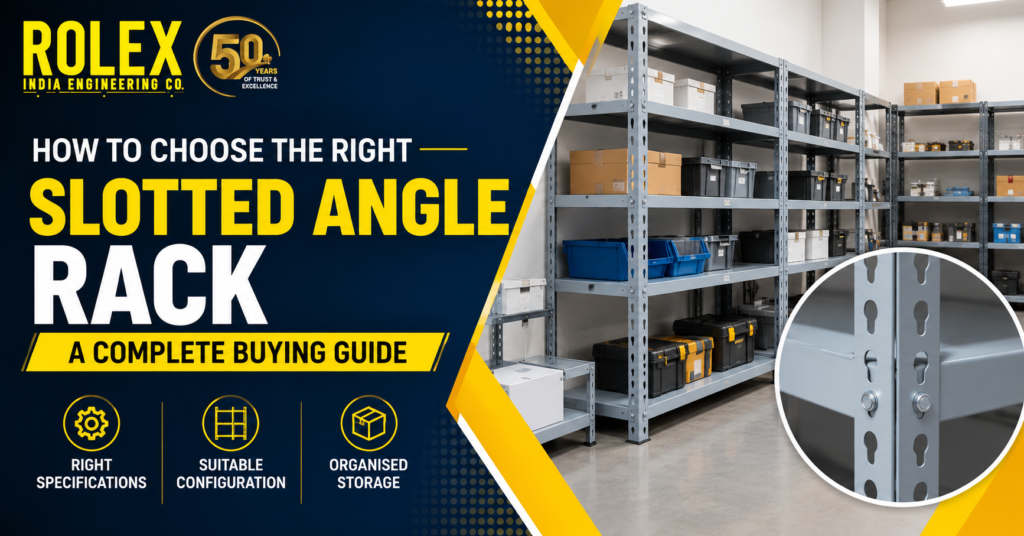
Choosing a storage rack may seem like a straightforward purchasing decision, but the wrong configuration can create problems long after installation. Shelves may not accommodate the materials you need to store, available space may be used inefficiently, or employees may find it difficult to access frequently required items.
For offices, warehouses, workshops and commercial facilities, a slotted angle rack can provide a flexible way to organise everyday storage. Its modular construction allows businesses to plan shelf arrangements according to their available space and storage requirements.
However, not every slotted angle storage rack is suitable for every application. The dimensions, material specifications, shelf design, load requirements and installation conditions all influence the final selection.
This guide explains how to evaluate these factors before purchasing a slotted angle rack. It also includes a practical planning example and a checklist you can use when discussing your requirements with a manufacturer.
What Is a Slotted Angle Rack?
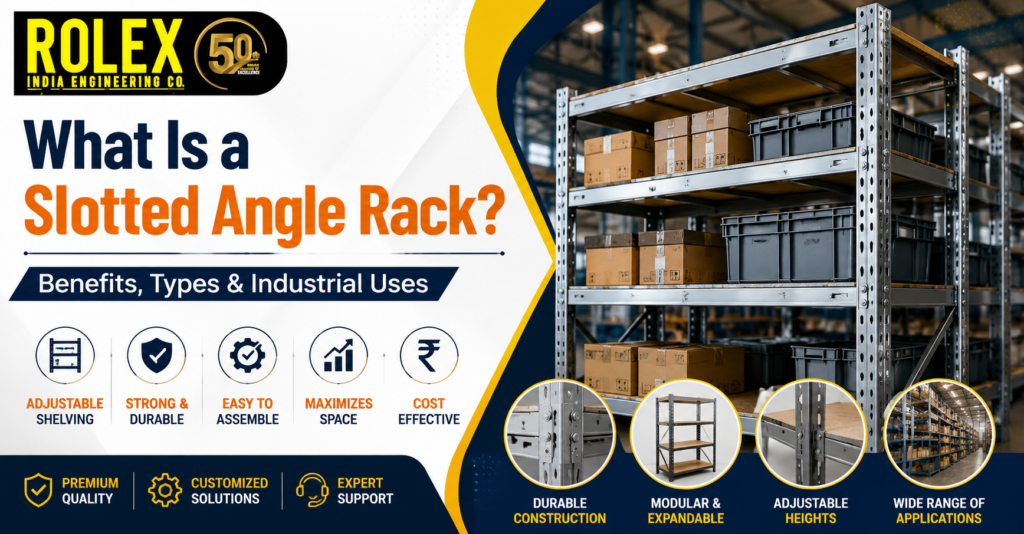
A slotted angle rack is a modular shelving system generally constructed using metal angle sections with regularly spaced slots. These sections are connected with suitable fasteners to support shelves at selected heights.
The slotted construction allows the shelf arrangement to be configured according to the dimensions of the materials being stored, subject to the rack’s design and manufacturer’s specifications.
Businesses commonly consider these racks for:
- Office files and archived documents
- Tools and workshop equipment
- Spare parts and components
- Cartons and packaged materials
- Retail inventory
- General commercial storage
The most important consideration is to select a configuration that matches the intended application rather than choosing a rack based only on its appearance or price.
8 Important Factors to Consider Before Buying a Slotted Angle Rack
1. Understand Your Actual Storage Requirements
Start by identifying exactly what you intend to store. A rack designed for office files may require a different shelf arrangement from one used for cartons, tools or industrial components.
Prepare a basic inventory of the materials you want to organise.
Consider:
- What items will be stored?
- How many items need to be accommodated?
- What are their approximate dimensions?
- How much does each item weigh?
- How frequently will employees access them?
- Will the inventory change over time?
For example, an office storing document boxes may require multiple shelves with relatively consistent spacing. A workshop storing equipment of different sizes may need a more varied shelf arrangement.
This initial assessment gives the manufacturer a clearer understanding of the required rack configuration.
2. Measure the Available Installation Area
Accurate measurements help prevent purchasing a rack that does not fit the intended location.
Measure the following dimensions before requesting a quotation:
| Measurement | Why it matters |
|---|---|
| Available height | Helps determine the maximum practical rack height |
| Available width | Determines how much horizontal space the rack can occupy |
| Available depth | Helps accommodate the dimensions of stored materials |
| Door and entry clearance | Helps plan delivery and installation access |
| Walking space | Allows employees to access shelves and move around the rack |
Also identify nearby columns, electrical panels, doors, pipes and other obstacles.
Practical tip: Do not measure only the empty wall or floor area. Consider the space employees need to stand, retrieve items and move materials safely.
A rack that fits physically but restricts access may not be suitable for daily operations.
3. Select the Correct Shelf Dimensions
Shelf dimensions should be based on the size and arrangement of the materials being stored.
Three measurements deserve particular attention.
Shelf width: The width should accommodate the intended materials without creating unnecessary overhang.
Shelf depth: The depth should provide appropriate support for the stored items while allowing employees to reach them conveniently.
Vertical shelf spacing: The distance between shelves should allow materials to be placed and removed without difficulty.
Consider an illustrative example: a business storing small spare parts, document boxes and medium-sized cartons may require different vertical gaps across its rack. Using identical shelf spacing throughout the structure could leave some areas underutilised.
Planning the shelf dimensions in advance helps create a more practical arrangement.
4. Confirm the Required Load Capacity
Load capacity is a critical factor when selecting any metal storage rack.
A rack’s capacity depends on its complete design and configuration. Relevant factors can include:
- Metal section dimensions and thickness
- Shelf material and construction
- Rack height, width and depth
- Connection and support arrangements
- Shelf span and support points
- Distribution of the stored weight
- Overall rack stability
Do not assume that two racks with similar external dimensions have the same load capacity.
Before placing an order, ask the manufacturer to confirm:
- Rated load capacity per shelf.
- Maximum permitted load for the complete rack.
- Whether the rating assumes evenly distributed weight.
- Any restrictions on shelf positioning or configuration.
- Whether additional support or anchoring is required.
Important: Never exceed the manufacturer’s specified load capacity. If the stored materials are concentrated in one area rather than distributed across the shelf, confirm whether the proposed arrangement is permitted.
Avoid relying on generic online weight ranges. The rating for your actual rack configuration is what matters.
5. Choose the Right Number of Shelves
The number of shelves should be determined by the materials you plan to store and how frequently you need to access them.
Adding more shelves does not always improve storage.
If the vertical distance between shelves is insufficient, larger materials may not fit. Employees may also find it difficult to retrieve items without rearranging other inventory.
Consider the following:
- Height of the tallest stored item
- Number of product or material categories
- Frequency of access
- Required space for handling materials
- Possibility of future inventory changes
A practical design may use closer shelf spacing for smaller components and wider gaps for larger cartons.
The objective is to create a useful storage arrangement rather than maximise the number of shelf levels.
6. Evaluate Material Quality and Surface Finish
The material and finish should match the intended operating environment.
When comparing slotted angle racks, request information about:
- Metal material and grade
- Angle section dimensions
- Material thickness
- Shelf construction
- Surface treatment
- Corrosion protection
- Recommended installation environment
For indoor commercial storage, a suitable protective finish can help maintain the appearance and condition of the rack during regular use.
Rolex India lists powder-coated slotted angle rack options and describes its products as customisable for different storage requirements. You can review the Slotted Angle Racks product page for the available product information.
Do not assume that every coating provides the same level of protection. Discuss environmental conditions and maintenance requirements with the manufacturer before selecting a finish.
7. Decide the Most Suitable Rack Configuration
The layout should reflect the shape of the storage area and the way employees use it.
Depending on the product design and installation requirements, businesses may consider arrangements such as:
Single-row shelving: Suitable for locations where racks are positioned along walls.
Multiple-row shelving: Useful when several rack units are required within a larger storage room.
Double-sided access: Can be considered where employees need to retrieve materials from both sides and the layout allows sufficient clearance.
Corner utilisation: A suitable custom arrangement may help use available corner space more effectively.
Before finalising the configuration, consider employee movement, access to other equipment and the location of frequently used inventory.
The manufacturer’s guidance should determine whether the proposed arrangement is structurally suitable.
8. Check Installation, Expansion and Maintenance Requirements
A storage rack is a long-term part of your facility’s organisation. Its installation and future maintenance should therefore be considered during the purchasing process.
Ask the supplier:
- Are installation instructions provided?
- Is professional assembly available?
- Are anchoring or additional stability measures required?
- Can the rack be dismantled and relocated?
- Are replacement components available?
- Can the shelf arrangement be changed safely?
- What maintenance is recommended?
Do not make structural modifications or change the rack configuration without confirming that the changes are permitted by the manufacturer.
For businesses planning to relocate or reorganise their storage areas, it is also useful to discuss dismantling and refitting support.
Rolex India provides information about its installation, dismantling and maintenance services, including services for slotted angle racks.
Practical Example: Planning a Slotted Angle Rack for a Workshop
Consider a workshop that needs to organise three categories of materials:
- Small tools and accessories
- Medium-sized spare parts
- Larger packaged components
Instead of ordering a standard rack without evaluating these items, the business should first measure the storage area and list the approximate dimensions and weights of its materials.
The manufacturer can then use this information to help plan:
| Storage category | Planning consideration |
|---|---|
| Small tools | Convenient shelf spacing and organised sections |
| Spare parts | Accessible shelves with suitable dimensions |
| Packaged components | Adequate shelf depth and vertical clearance |
| Frequently used items | Convenient access within the storage layout |
| Heavier materials | Verified shelf rating and approved load distribution |
This example is illustrative, not a tested rack design or load recommendation.
The final dimensions, shelf arrangement, material specifications and permitted loads should be confirmed by the manufacturer for the actual installation.
Slotted Angle Rack Buying Checklist
Before approving a quotation, use this checklist to review your requirements.
| Checklist item | What to confirm |
|---|---|
| Storage purpose | Types of materials to be stored |
| Rack dimensions | Required height, width and depth |
| Shelf dimensions | Width, depth and vertical spacing |
| Shelf quantity | Number of required levels |
| Load capacity | Manufacturer-confirmed rating |
| Material | Metal grade and section specifications |
| Surface finish | Suitable finish for the environment |
| Configuration | Single-sided, multiple-row or other arrangement |
| Installation | Assembly and stability requirements |
| Future changes | Permitted adjustments and expansion options |
| Quotation | Complete specifications and commercial terms |
| Support | Installation, maintenance and after-sales assistance |
Keeping these details together makes it easier to compare supplier quotations and avoid confusion during ordering.
Common Buying Mistakes to Avoid
Even when a rack looks suitable, overlooking a few important details can result in an unsuitable storage arrangement.
Selecting a Rack Based Only on Price
A low quotation may not include the same material, shelf dimensions, finish or load specifications as another supplier’s proposal.
Compare the complete specifications before making a purchasing decision.
Ignoring the Weight of Stored Materials
A shelf’s appearance does not establish its safe working capacity. Always obtain the manufacturer’s rating for the proposed configuration.
Choosing Incorrect Shelf Spacing
Shelves that are too close together can restrict access, while unnecessarily large gaps may waste available vertical space.
Forgetting Future Storage Requirements
Inventory changes can affect the way a rack is used. Consider whether you may need different shelf spacing or additional storage sections later.
Overlooking Installation Conditions
The floor, surrounding access area, rack stability and manufacturer’s assembly requirements should be reviewed before installation.
Making Unapproved Modifications
Adding components, changing connections or repositioning shelves may affect the rack’s structural performance. Confirm all proposed changes with the manufacturer.
When Should You Consider a Different Storage System?
Slotted angle racks are not the right answer for every storage requirement.
Before selecting a system, consider the size, weight, volume and handling method of your inventory.
| Storage requirement | Storage system to evaluate |
|---|---|
| General manually accessed materials | Slotted angle shelving |
| Larger or heavier industrial loads | Heavy-duty storage racks |
| Palletised inventory handled by equipment | Pallet racking |
| Organised office documents | Filing and document storage racks |
| High-density storage of files or materials | Mobile compactor storage systems |
The final selection should depend on the facility’s operating requirements and the technical specifications of the proposed system.
Businesses comparing industrial storage options can also explore Industrial Storage Racks in Mumbai.
Why Consider Rolex India for Slotted Angle Rack Requirements?
Choosing a storage manufacturer involves more than comparing product prices. Businesses should also consider product customisation, installation requirements and the support available throughout the project.
Rolex India Engineering Co. has been manufacturing industrial and office storage solutions since 1975. Its product range includes slotted angle racks and other storage systems for commercial and industrial applications.
The company provides information about customised rack dimensions and configurations through its product page. Its service offering also includes installation, dismantling, refitting and maintenance support for storage systems.
You can explore:
- Slotted Angle Racks by Rolex India
- About Rolex India Engineering Co.
- Installation and Maintenance Services
If you are planning a new storage arrangement, share your available space, material dimensions and storage requirements with the team to discuss a suitable configuration.
Frequently Asked Questions About Slotted Angle Racks
1. How do I choose the right slotted angle rack?
Start by measuring the available space and identifying the materials you need to store. Then evaluate the shelf dimensions, number of levels, load requirements, material specifications and installation conditions.
2. What information should I provide when requesting a slotted angle rack quotation?
Provide the required rack height, width and depth, details of the stored materials, approximate item weights, number of shelves, installation location and any specific finish requirements. This helps the manufacturer assess the appropriate configuration.
3. Can slotted angle racks be customised?
Yes. Customisation options depend on the manufacturer’s product range. Rolex India provides customisable slotted angle rack solutions, including different dimensions and shelf configurations.
4. Can the shelf height be adjusted?
Slotted angle shelving is designed around a modular arrangement that can allow shelf positions to be changed. The permitted adjustment method and configuration should always follow the manufacturer’s instructions.
5. How much weight can a slotted angle rack hold?
There is no single load rating that applies to every slotted angle rack. Capacity depends on the material, dimensions, shelf construction, connections and complete rack configuration. Always request the manufacturer’s specified load rating.
6. Which material is suitable for slotted angle racks?
The appropriate material depends on the intended application, required load capacity and operating environment. Ask the manufacturer for details about the metal grade, thickness and protective finish.
7. Are slotted angle racks suitable for warehouses?
They can be suitable for warehouses that need organised, manually accessed storage for appropriate materials. The rack must be selected according to the inventory dimensions, load requirements and warehouse conditions.
8. Can slotted angle racks be used in offices?
Yes. Businesses can use suitable slotted angle shelving to organise files, stationery, document boxes and other office materials. The shelf arrangement should match the items being stored.
9. What is the difference between a slotted angle rack and a heavy-duty rack?
Slotted angle racks are generally selected for modular shelving applications, while heavy-duty racks are designed for storage requirements involving larger or heavier loads. The actual suitability and load capacity must be established from each system’s specifications.
10. Do slotted angle racks require professional installation?
Installation requirements depend on the rack design, size and application. Follow the manufacturer’s assembly instructions, and seek professional installation support where required.
11. Can slotted angle racks be relocated?
Some modular designs can be dismantled and reassembled, subject to the manufacturer’s instructions and the condition of the components. Check the suitability of the new installation area before relocating the rack.
12. How do I maintain a slotted angle rack?
Follow the manufacturer’s maintenance guidance. As part of routine housekeeping, check for visible damage, loose connections, corrosion and changes to the rack configuration. Remove damaged or unsuitable components from use until they have been assessed.
Conclusion
Choosing the right slotted angle rack starts with understanding what you need to store, how much space is available and how employees will use the shelving every day.
Dimensions, shelf spacing, material specifications, load capacity and installation conditions should all be considered before placing an order. A carefully planned configuration can make storage easier to manage and help businesses maintain a more organised working environment.
Rather than selecting a rack based only on price or appearance, compare the complete specifications and discuss your requirements with an experienced manufacturer.
Planning a new storage arrangement for your office, workshop or warehouse? Explore the customised Slotted Angle Rack solutions from Rolex India and discuss your storage requirements with the team.

Related posts