Pallet Racking vs Heavy Duty Racks: Which Storage System is Better for Warehouses?

RFID Smart Lockers vs Traditional Lockers: Which is Better for Modern Businesses?
May 20, 2026
What Is a Slotted Angle Rack? Benefits, Types & Industrial Uses (Complete Guide)
July 13, 2026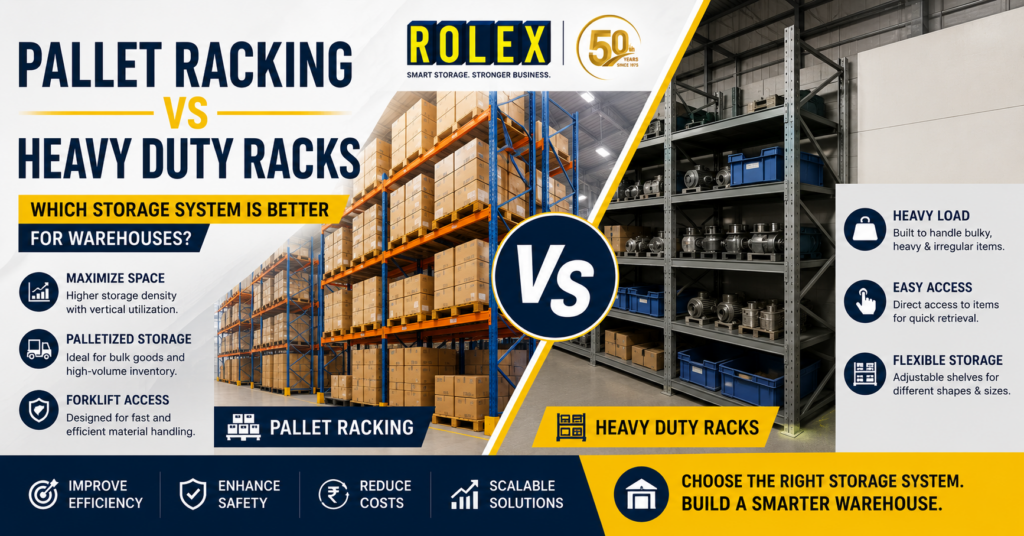
Warehouses are no longer just storage spaces. They are critical operational hubs that directly impact inventory management, order fulfillment, productivity, and business growth. Whether you’re managing a distribution center, manufacturing facility, e-commerce warehouse, or industrial storage unit, choosing the right storage system can significantly influence efficiency and profitability.
One of the most common questions warehouse managers and business owners face is: Pallet Racking vs Heavy Duty Racks, Which Storage System is Better for Warehouses?
Both storage solutions are designed to maximize storage capacity and improve warehouse organization, but they serve different purposes. The right choice depends on factors such as inventory type, warehouse size, accessibility requirements, and future scalability.
In this comprehensive guide, we’ll compare Pallet Racking vs Heavy Duty Racks, explore their advantages and limitations, and help you determine the best solution for your warehouse operations.
What is a Pallet Racking System?
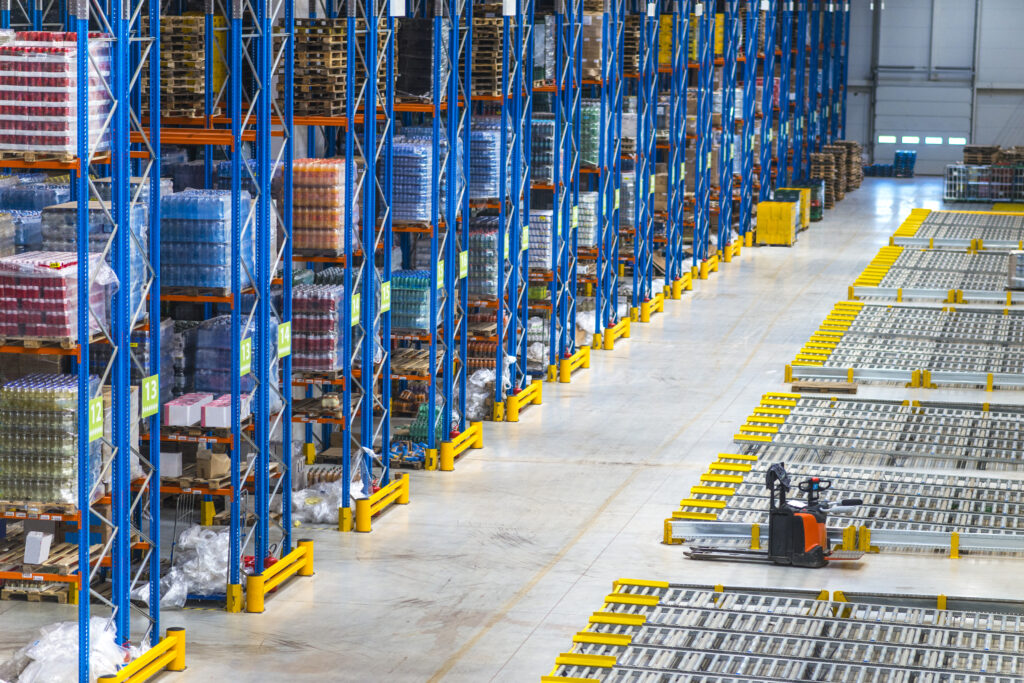
A Pallet Racking System is a warehouse storage solution designed specifically for storing palletized goods. It consists of vertical frames and horizontal beams that create multiple storage levels, allowing products to be stored vertically and accessed using forklifts.
Pallet racking systems are commonly used in:
- Distribution centers
- Logistics warehouses
- Manufacturing facilities
- Retail inventory centers
- FMCG warehouses
- E-commerce fulfillment centers
Their primary purpose is to maximize warehouse space while ensuring quick and efficient access to inventory.
How Pallet Racking Works
Products are placed on pallets and stored on rack levels using forklifts. Depending on warehouse requirements, different pallet racking configurations can be used, including selective racking, drive-in racking, push-back racking, and pallet flow systems.
Key Features of Pallet Racking Systems
- Maximizes vertical warehouse space
- Supports high-volume inventory storage
- Compatible with forklifts and warehouse equipment
- Scalable for future expansion
- Improves inventory organization
Common Industries Using Pallet Racking
Industries with high inventory turnover and palletized goods rely heavily on pallet racking systems for efficient operations.
What Are Heavy Duty Racks?
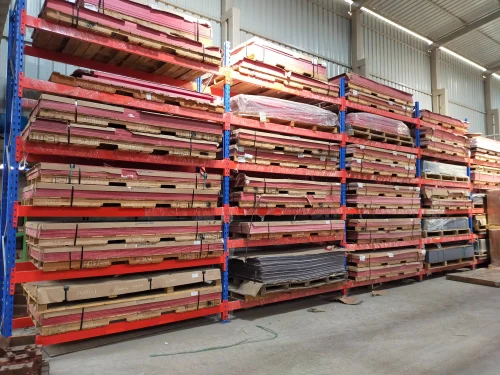
Heavy-duty racks are industrial-grade storage systems designed to support large, bulky, or heavy products that may not be stored on pallets.
Unlike pallet racking systems, heavy-duty racks offer greater flexibility and can accommodate products of various shapes and sizes.
Heavy-duty racks are widely used in:
- Manufacturing units
- Engineering workshops
- Automotive warehouses
- Industrial storage facilities
- Spare parts warehouses
- Hardware storage centers
How Heavy Duty Racks Work
Heavy-duty racks feature multiple shelving levels with high load-bearing capacity. Products can be manually loaded and unloaded without requiring specialized material handling equipment.
Key Features of Heavy Duty Racks
- High load-bearing capacity
- Suitable for irregularly shaped items
- Easy product accessibility
- Durable steel construction
- Cost-effective storage solution
Common Industries Using Heavy Duty Racks
Industries storing tools, machinery components, raw materials, and heavy products frequently choose heavy duty racks due to their flexibility and strength.
Pallet Racking vs Heavy Duty Racks: Quick Comparison Table
| Feature | Pallet Racking System | Heavy Duty Racks |
|---|---|---|
| Storage Type | Palletized Goods | Non-Palletized Goods |
| Space Utilization | Excellent Vertical Storage | Moderate Vertical Storage |
| Accessibility | Forklift-Based | Manual Access |
| Load Capacity | High | Very High |
| Installation Cost | Higher | Moderate |
| Scalability | Excellent | Good |
| Warehouse Efficiency | High | Medium |
| Best For | Large Warehouses | Industrial Storage |
Storage Capacity Comparison
Storage capacity is often the first factor businesses consider when evaluating warehouse storage systems.
Pallet Racking Storage Capacity
Pallet racking systems are specifically designed to maximize warehouse height.
Benefits include:
- Increased storage density
- Better utilization of vertical space
- Reduced floor space requirements
- Higher inventory storage capacity
Large warehouses can significantly increase storage volume without expanding their physical footprint.
Heavy Duty Rack Storage Capacity
Heavy-duty racks provide substantial storage capacity but typically require more floor space.
Advantages include:
- Flexible shelf arrangements
- Storage for oversized products
- High load-bearing shelves
However, they may not fully utilize warehouse height compared to pallet racking systems.
Which Storage System Maximizes Warehouse Space?
For businesses focused on maximizing storage density and warehouse capacity, pallet racking systems generally offer superior space utilization.
Accessibility and Inventory Management Comparison
Efficient inventory access directly impacts productivity and order fulfillment speed.
Accessing Inventory with Pallet Racking
Pallet racking systems rely on forklifts and warehouse equipment for inventory retrieval.
Advantages:
- Efficient handling of large inventory volumes
- Organized stock management
- Faster pallet movement
Challenges:
- Requires forklift operation
- Less suitable for frequent manual picking
Accessing Inventory with Heavy Duty Racks
Heavy-duty racks allow direct manual access to products.
Benefits:
- Faster item retrieval
- Improved picking efficiency
- No need for specialized equipment
Which System Improves Warehouse Efficiency?
For warehouses handling palletized inventory in bulk, pallet racking systems offer better efficiency. For manual picking operations, heavy-duty racks may provide easier access.
Space Utilization Comparison
Warehouse space is valuable. The ability to maximize available space directly impacts operational costs.
Vertical Storage Benefits of Pallet Racking
One of the biggest advantages of pallet racking systems is vertical storage optimization.
Benefits include:
- Utilization of ceiling height
- Reduced warehouse footprint
- Increased storage density
This makes pallet racking systems ideal for warehouses with limited floor space.
Floor Space Requirements of Heavy Duty Racks
Heavy-duty racks primarily focus on horizontal storage.
While effective for certain products, they generally require more floor area compared to pallet racking systems.
Best Option for High-Density Warehouses
For warehouses looking to maximize every square foot, pallet racking systems offer a clear advantage.
Load Capacity Comparison
The ability to safely store heavy inventory is a critical consideration.
Weight Handling Capacity of Pallet Racking
Modern pallet racking systems are engineered to support substantial loads.
Capacity depends on:
- Beam design
- Rack configuration
- Pallet dimensions
- Structural specifications
Weight Handling Capacity of Heavy Duty Racks
Heavy-duty racks are designed specifically for high-load applications.
They can accommodate:
- Machinery parts
- Industrial equipment
- Metal components
- Heavy raw materials
Which Rack Handles Heavier Loads?
For extremely heavy and irregularly shaped products, heavy-duty racks often provide greater flexibility.
Installation and Maintenance Costs
Cost plays a significant role in storage system selection.
Pallet Racking Cost Factors
Installation costs include:
- Structural framework
- Professional installation
- Forklift aisle planning
- Safety accessories
Initial investment is generally higher.
Heavy Duty Rack Cost Factors
Heavy duty racks usually involve:
- Lower installation complexity
- Reduced infrastructure requirements
- Lower initial costs
Long-Term Return on Investment
While pallet racking systems require higher upfront investment, they often deliver better long-term ROI through increased storage capacity and operational efficiency.
Warehouse Safety Considerations
Safety should never be overlooked when selecting warehouse storage solutions.
Safety Features in Pallet Racking
Modern pallet racking systems incorporate:
- Load capacity indicators
- Rack protection systems
- Impact barriers
- Safety locking mechanisms
Safety Features in Heavy Duty Racks
Heavy-duty racks provide:
- Reinforced steel structures
- High load stability
- Durable shelving systems
Best Practices for Safe Warehouse Storage
- Conduct regular inspections
- Avoid overloading racks
- Train employees properly
- Follow manufacturer guidelines
Both systems can provide excellent safety when installed and maintained correctly.
Industries Best Suited for Pallet Racking
E-commerce Warehouses
Fast-moving inventory requires organized pallet storage.
Distribution Centers
High-volume goods movement benefits from palletized storage.
FMCG Warehouses
Pallet racking supports efficient stock rotation.
Logistics Companies
Bulk inventory management becomes easier with pallet racking systems.
Industries Best Suited for Heavy Duty Racks
Manufacturing Facilities
Heavy equipment and materials require strong storage systems.
Automotive Warehouses
Perfect for storing spare parts and components.
Engineering Workshops
Provides easy access to tools and machinery.
Spare Parts Storage
Supports organized inventory management.
Pallet Racking vs Heavy Duty Racks: Pros and Cons
Advantages of Pallet Racking
- Maximizes vertical space
- High inventory capacity
- Excellent scalability
- Improved warehouse efficiency
- Better inventory organization
Disadvantages of Pallet Racking
- Higher installation costs
- Requires forklifts
- More complex setup
Advantages of Heavy Duty Racks
- Lower initial investment
- Flexible storage options
- Easy accessibility
- Suitable for non-palletized goods
Disadvantages of Heavy Duty Racks
- Lower storage density
- Requires more floor space
- Limited vertical optimization
How to Choose the Right Storage System for Your Warehouse
Consider Your Inventory Type
Palletized inventory favors pallet racking systems, while irregular products are better suited for heavy duty racks.
Evaluate Warehouse Size
Larger warehouses often benefit from pallet racking systems due to vertical storage capabilities.
Assess Future Growth Requirements
Businesses planning expansion should prioritize scalable solutions.
Calculate Budget and ROI
Focus on long-term operational benefits rather than initial costs alone.
Frequently Asked Questions
What is the difference between pallet racking and heavy-duty racks?
Pallet racking systems are designed for palletized inventory and maximize vertical storage, while heavy-duty racks support heavy, non-palletized products.
Which rack is best for warehouses?
The best choice depends on inventory type, storage requirements, and operational goals.
Are pallet racks stronger than heavy duty racks?
Both systems offer high load capacities, but heavy duty racks often provide greater flexibility for irregular and extremely heavy items.
What industries use pallet racking systems?
E-commerce, logistics, manufacturing, retail, and FMCG industries commonly use pallet racking systems.
How long do industrial storage racks last?
High-quality industrial storage systems can last 15–25 years or more with proper maintenance.
Final Verdict: Pallet Racking vs Heavy Duty Racks
When comparing Pallet Racking vs Heavy Duty Racks, the right choice depends entirely on your warehouse requirements.
If your warehouse handles large volumes of palletized inventory and aims to maximize storage capacity, pallet racking systems are the superior solution. They optimize vertical space, improve operational efficiency, and support future growth.
On the other hand, if your business stores heavy, bulky, or irregularly shaped products that require direct access, heavy duty racks offer unmatched flexibility and durability.
Many modern warehouses even combine both systems to create a customized storage environment that balances efficiency, accessibility, and cost-effectiveness.
Ultimately, investing in the right warehouse storage solution can improve productivity, reduce operational costs, and support long-term business success.
Looking for Reliable Warehouse Storage Solutions?
Since 1975, Rolex India has been delivering industrial storage solutions that help businesses maximize space and improve efficiency.
Our storage solutions include:
- Pallet Racking Systems
- Heavy Duty Storage Racks
- Mobile Compactor Storage Systems
- Industrial Lockers
- Filing Cabinets
- Warehouse Storage Solutions
Whether you’re upgrading an existing warehouse or planning a new facility, our experts can help you choose the right storage system for your operational needs. Contact Rolex India today to explore customized warehouse storage solutions.

Related posts